
How TradingView Charts Support Multi-Timeframe Confluence Strategies
Traders do not rely solely on gut feeling when deciding on how to time their entries and exits. They follow a strategy referred to as multi-timeframe confluence that uses multiple timeframes to base trading decisions on broader market trends. This approach enables them to streamline their plans and build up more confidence before they settle on any action. Properly used, it aids in the elimination of noise and gives a more orderly method of entering trades with precision and clarity.
This would be in practical terms as one would start with a larger timeframe such as the weekly or daily chart to determine the general direction of the market. After being able to know about that wider context, traders will switch to a lesser timeframe like the four-hour or an hour chart to seek specific trade setups. The concept is that when both timeframes point in the same direction, chances of success are more. This is where the technology comes as a lifesaver. The tools which provide some clean, synchronized perspective at various points in time ease the whole process and make it more intuitive.
Such platforms as TradingView charts have become popular in this area and bring a high degree of flexibility in the process. Being able to open more than one chart in a single window (but with each one showing various time periods and indicator lines) allows the traders to easily synchronise their signals. Instead of interchanging, they can view all at once. Not only does this save time, but it also reduces the possibility of misinterpreting the market structure. Such tools would make it much more effective to find trends, validate breakouts, and rely on sound technical information, as opposed to gut reactions.
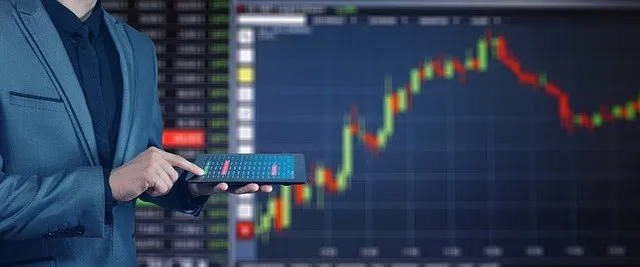
Image Source: Pixabay
The interconnection of different indicators that have different behaviors in various timeframes is an essential feature of multi-timeframe analysis. An example can be given, a moving average crossover on a lower timeframe may appear promising but once the higher timeframe is indicating a high resistance level, then that signal is weakened. With this method traders are taught patience as they wait for alignment across timeframes. They stick to quality and not quantity because fewer high-quality trades can be lucrative as compared to many uncertain ones.
Analysis is not the only virtue of charting the success of this strategy but discipline is another. It makes a trader honor the process, when the market discourages them with rapid shifts in lower timeframe setups. With a visual confirmation of a longer period of time, there are less risks of going into a trade early or against the trend. Such structure allows novice traders to establish positive habits early on and educates them that it pays to wait and not to follow every action.
The most helpful aspect of TradingView charts in terms of promoting this strategy is their ability to be customized to the greatest extent possible. It is possible to connect charts, color zones and create alert settings, which trigger across all timeframes. The seamless experience is the same on a desktop and mobile device and this enables easy tracking of various assets. All these features contribute to giving the user a full perspective of the market which is essential in the use of multi-timeframe confluence.
Traders can leverage multi-timeframe confluence by pairing discipline with smart tools and a clear action plan. It does not mean having lots of data but reading the data in context. Social networks such as TradingView facilitate that process and elevate it to a higher level of streamlined functionality.

Comments